HighAerial
Sindh showcases flood recovery; Centre pitches sewage overhaul at COP31
🇵🇰 PakistanNov 17, 2026 03:40SRC: DAWNBY: none@none.com (Agencies)
Intelligence summary
ISLAMABAD / ANTALYA: Showcasing Sindh’s comprehensive climate resilience strategy at COP31, Chief Minister Murad Ali Shah on Monday called for stronger international cooperation, equitable climate finance and technology transfer, stressing that developing countries — despite contributing the least to global emissions – were shouldering the heaviest climate change burden. Delivering the keynote address during a session titled ‘Sindh’s Climate Action: Combating Climate Change’ at the Pakistan Pavi
Detailed report
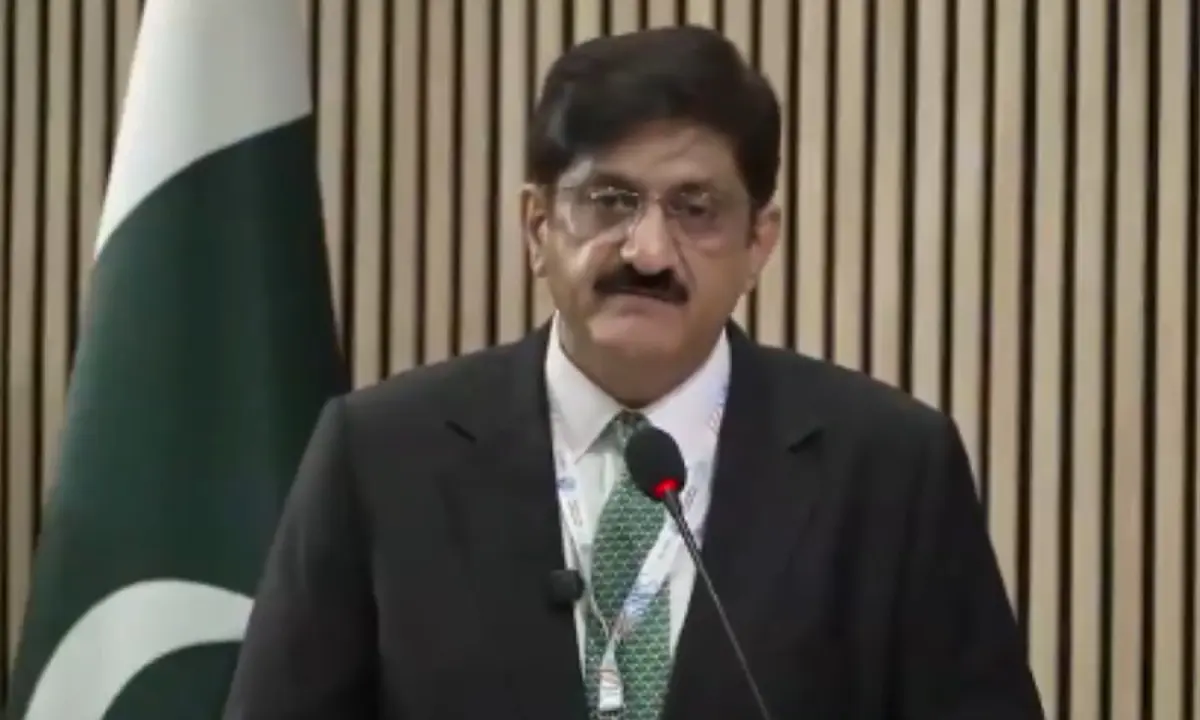
ISLAMABAD / ANTALYA: Showcasing Sindh’s comprehensive climate resilience strategy at COP31, Chief Minister Murad Ali Shah on Monday called for stronger international cooperation, equitable climate finance and technology transfer, stressing that developing countries — despite contributing the least to global emissions – were shouldering the heaviest climate change burden.
Delivering the keynote address during a session titled ‘Sindh’s Climate Action: Combating Climate Change’ at the Pakistan Pavilion, he said that in the wake of the devastating 2022 floods, his province had set a target of constructing 2.1 million climate-resilient houses for flood-affected families, making it the world’s largest post-disaster housing reconstruction initiative.
The provincial government had adopted a strategy of rebuilding stronger and safer communities rather than merely repairing damaged infrastructure, CM Murad said, adding that one million houses had been completed within three and a half years, while another 700,000 were at different stages of construction.
More than 42,000 community committees had been established, and over 1.7 million bank accounts had been opened for beneficiaries. Financial assistance was transferred directly to families, enabling them to construct their own houses, he said. He also highlighted that women had been given a central role in the rehabilitation process, through property ownership and financial empowerment.
CM Murad sets out post-flood recovery on homes, barrages, embankments and mangroves; says vulnerable communities must not face climate crisis alone
Regarding flood protection and infrastructure rehabilitation, CM Murad said Sindh had reconstructed 205km of protective embankments, restored 157,000 hectares of agricultural land and strengthened the Manchar Lake protection system, increasing its floodwater discharge capacity to 83,500 cusecs.
All 44 gates of Sukkur Barrage had been replaced, while reconstruction of 54 out of 65 gates at Guddu Barrage had been completed, he noted, adding that Sindh aimed to complete the barrage rehabilitation and modernisation programme by next year.
Simultaneously, the government is rebuilding 5,811 flood-affected schools, rehabilitating 141 roads covering 825 kilometres across 19 districts and restoring more than 1,000 damaged health facilities, with particular attention to maternal and child healthcare, he said.
Highlighting nature-based climate solutions, the chief minister said Sindh had restored mangrove forests over 126,000 hectares in the Indus Delta.
Under the Delta Blue Carbon initiative, an estimated 142 million tonnes of carbon dioxide emissions were expected to be absorbed or reduced, while 5.6 million tonnes of carbon credits had been verified.
In his closing remarks, Murad Ali Shah invited international development partners and investors to support Sindh through climate finance, modern technology, and investment in clean energy, water conservation, and climate-resilient infrastructure.
He said the growing impact of climate disasters is a shared global responsibility, and vulnerable communities must not be left alone to face the consequences.
Wastewater overhaul
Meanwhile, on the sidelines of COP31, Climate Change Minister Dr Musadik Malik said that Pakistan is seeking to mobilise public and private investment to transform wastewater management from a conventional disposal system into a circular model focused on treatment, recycling and reuse, amid mounting water security challenges driven by climate change, pollution and extreme weather.
He shared this vision during a meeting with Unicef’s Cindy Kushner, who oversees the organisation’s Water, Sanitation and Hygiene (WASH) and Climate, Environment and Energy (CEE) work.
The meeting focused on Pakistan’s preparations for the 2026 UN Water Conference — co-hosted by Senegal and the United Arab Emirates — and opportunities to advance child-sensitive climate action ahead of COP31.
The minister said the proposed national investment platform for water and sanitation would help translate climate vulnerabilities into bankable projects by mobilising public investment and attracting climate and private-sector financing.
He said the Indus Basin was facing mounting pressures from glacial melt, extreme heat, floods and pollution, requiring Pakistan to move away from the linear model of waste disposal towards a circular approach to waste and wastewater management.
The proposed platform would prioritise wastewater circularity, with particular emphasis on significantly increasing the proportion of wastewater that was safely treated and reused, which currently remained low.
The meeting also discussed Unicef’s Climate Landscape Analysis for Children (CLAC), for which an opening consultation was welcomed by the minister at COP31. The Unicef-led framework is intended to guide climate-related interventions across health, education, nutrition, water, sanitation and hygiene, and child protection.
Published in Dawn, November 17, 2026
AI threat score40/100